Technical specifications
Project description
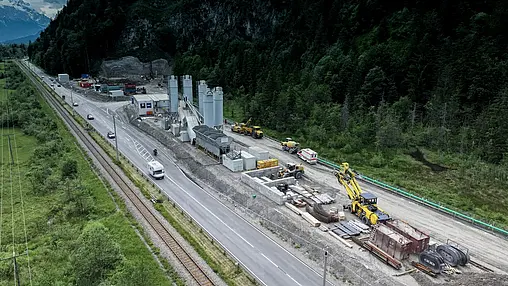
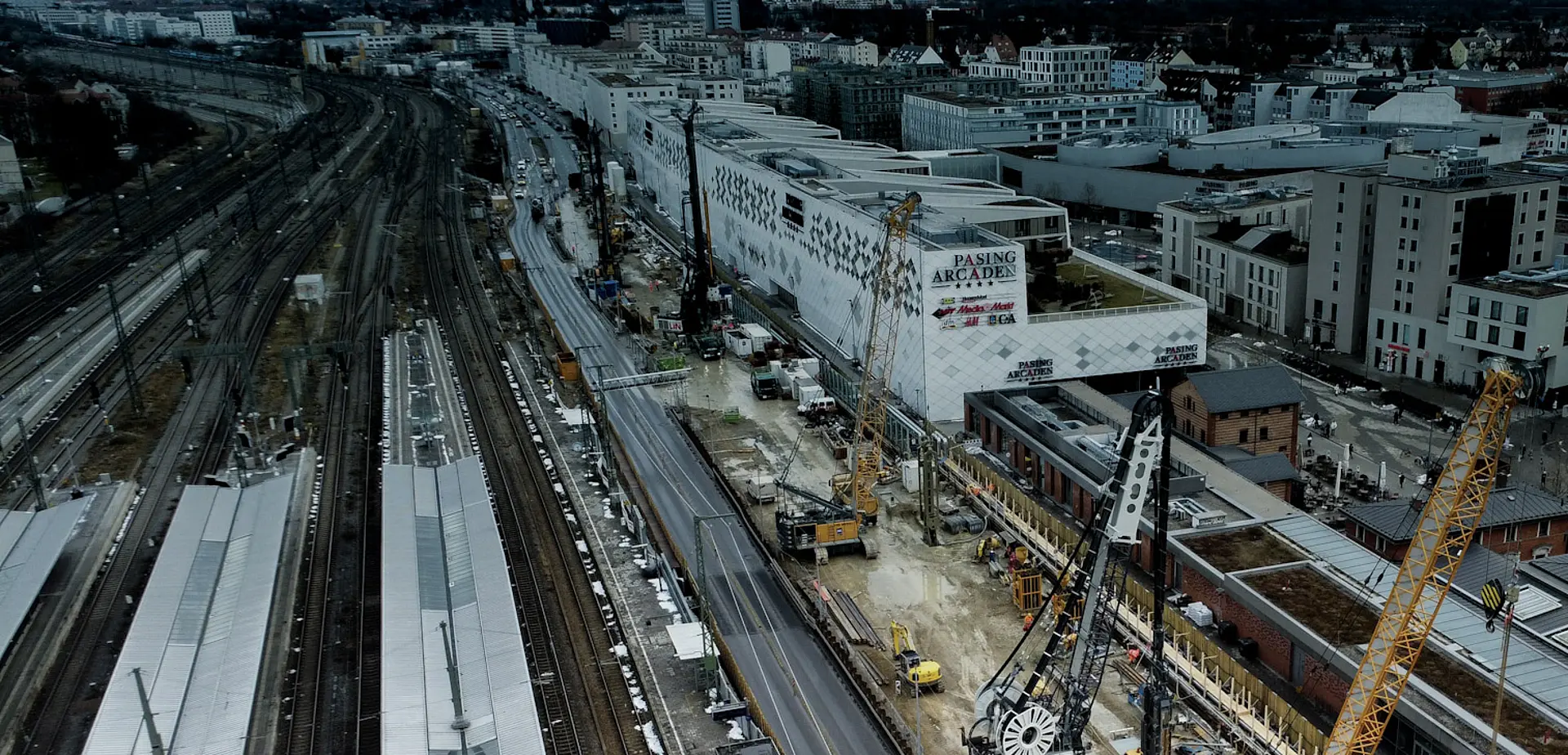
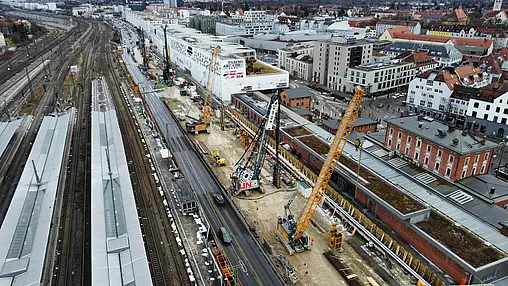
In Munich, we are extending the U5 (Lot 2) from Laim to Pasing. The approximately 2.7-kilometre-long section forms part of the large-scale modernisation of the city’s transport infrastructure. Three new stations (Baumschule Laim, Am Knie and Pasing) as well as several emergency exits will be added to the network in future.
Construction method
Special civil engineering
- Concrete volume: 110,000 m³
- Bored pile walls: 50,000 m²
- Diaphragm walls: 30,000 m²
- Sheet piling: 10,000 m²
- DSV ground stabilisation: 17,000 m²
- BST reinforcement: 15,000 t
- Reinforcement connections: 83,000 pcs
Excavation pits
Excavation: 550,000 m³
Civil engineering
Concrete volume: 160,000 m³
Reinforcement: 26,000 tonnes
Reinforcement connections: 250,000
Mechanised tunnel boring
Excavation: 173,000 m³
Reinforcement for segmental linings: 4,700 t
Concrete for segmental linings: 33,000 m³
Track construction
- Slab track: 5,380 m
Geology
The geological conditions along the route vary considerably, ranging from Quaternary gravels to Tertiary sands, silts and clays
General information
Project
Extension of Munich Underground Line 5 (U5 West, Lot 2)
Client
City of Munich – Building Department, Civil Engineering Division
Contractor
U5 West – Lot 2 consortium comprising Wayss & Freytag Ingenieurbau AG, Ed. Züblin AG and the Max Bögl Group
Construction period
2024 to 2032


Modern infrastructure for Munich’s future
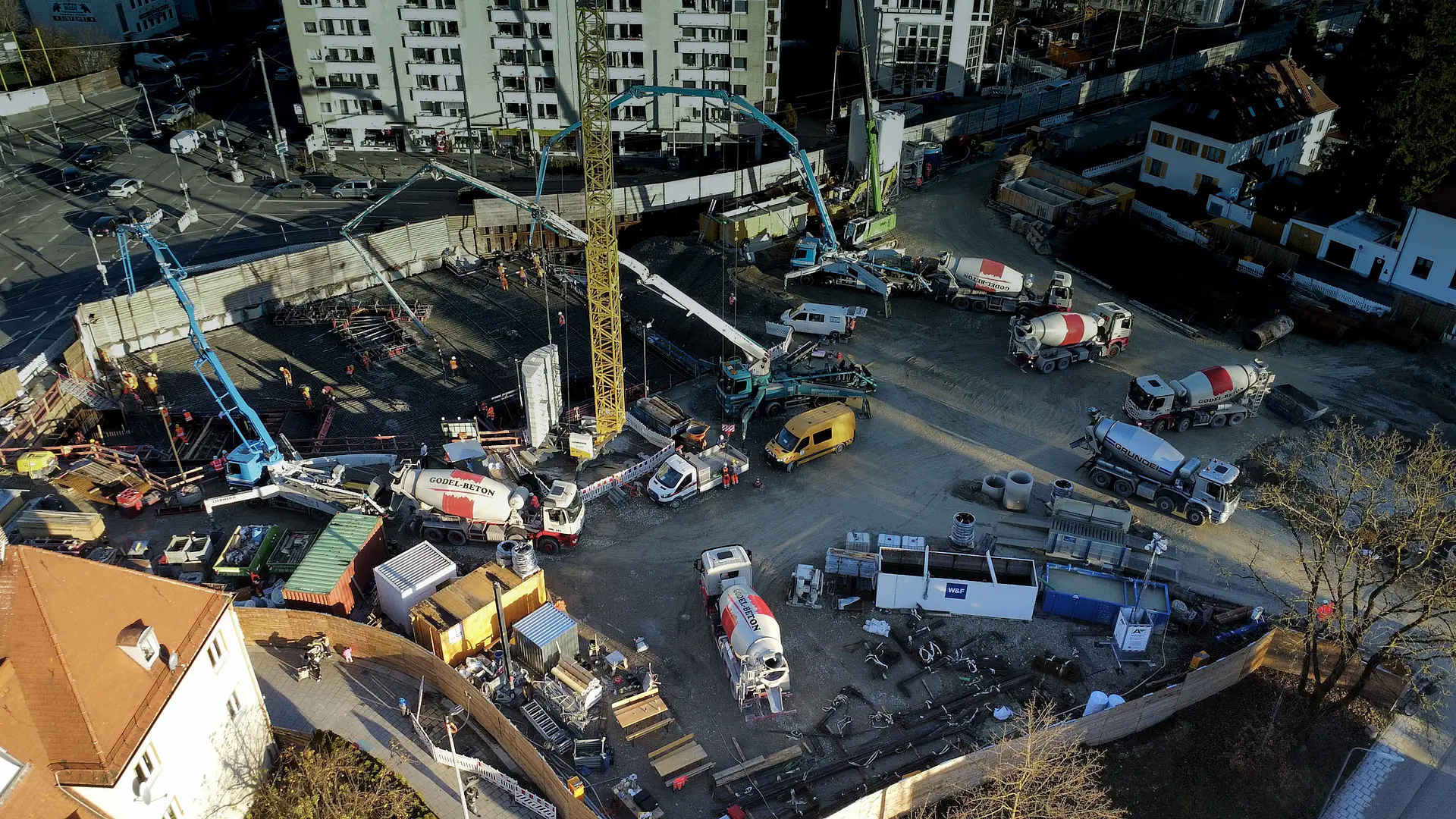
We are extending the U5 line from Laim to Pasing, creating around 3.8 kilometres of new tunnel and three additional stations: Baumschule Laim, Am Knie and Pasing. The project is a key component in the modernisation of Munich’s local transport network. The construction work is being carried out in two phases. Whilst the first phase uses the tried-and-tested diaphragm wall and cover construction method, the second phase relies on a combination of different cover construction methods and mechanical tunnelling. At the heart of the logistics is the TVM launch shaft with a sorting facility, segment storage and workshops. The Am Knie station is being built using a half-side cover construction method, so that trams and road traffic can continue to operate at all times. The Pasing station is being constructed with diaphragm walls up to 45 metres deep and bored piles 35 metres deep – also whilst traffic continues to flow and using a half-side cover construction method. For the tunnel sections, two hydro-shield tunnel boring machines are being used alongside conventional tunnelling with ground freezing. Each machine is creating a tunnel tube approximately 1,850 metres long with an external diameter of 7.70 metres.
Further projects
Frankfurt
Sustainable mobility for Frankfurt’s Europaviertel
München
Extension of underground line 5
Garmisch-Partenkirchen
Relieving congestion on a major transport route in the Alpine foothills