Technical data
Project description
The ElbX crossing structure is part of the SuedLink grid expansion project, an approx. 700 km long 525 kV direct current line from Brunsbüttel in Schleswig-Holstein to Großgartach in Baden-Württemberg.
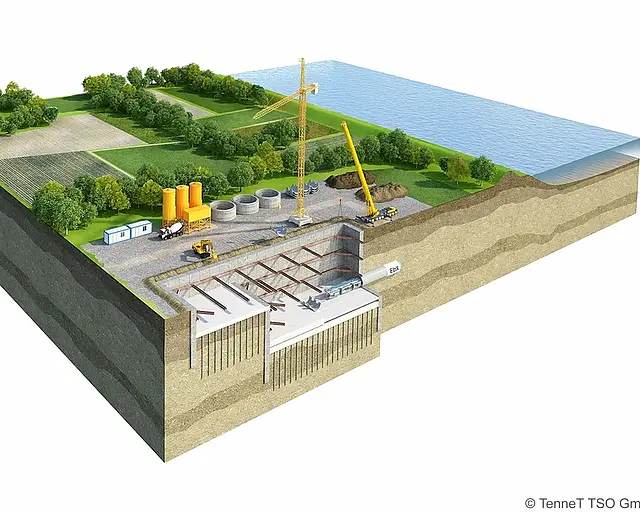
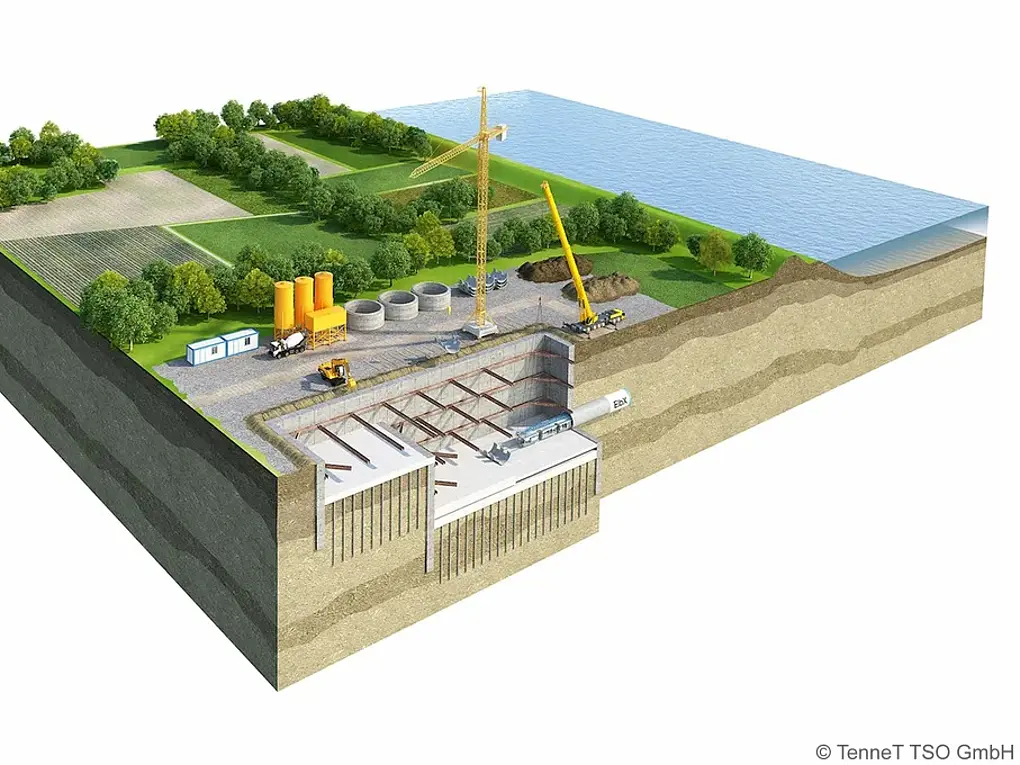
- It consists of a tunnel structure below the Elbe as well as underground access and joint structures on both sides of the Elbe and the associated above-ground operating buildings
- A total of six high-voltage cables are to be routed under the Elbe
Construction method
- The two access structures and the two sleeve structures are to be constructed in diaphragm wall construction pits up to approx. 25 metres deep
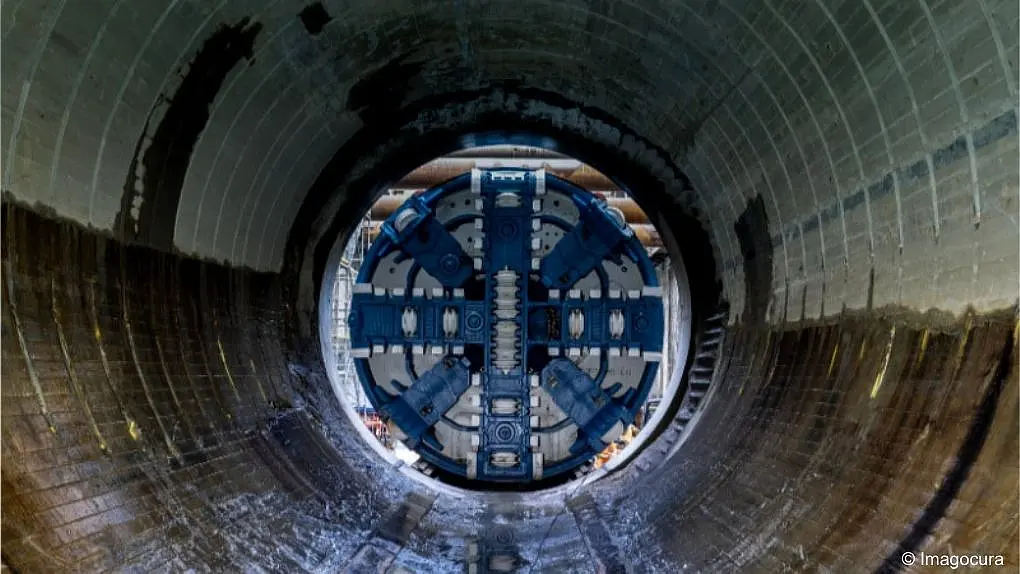
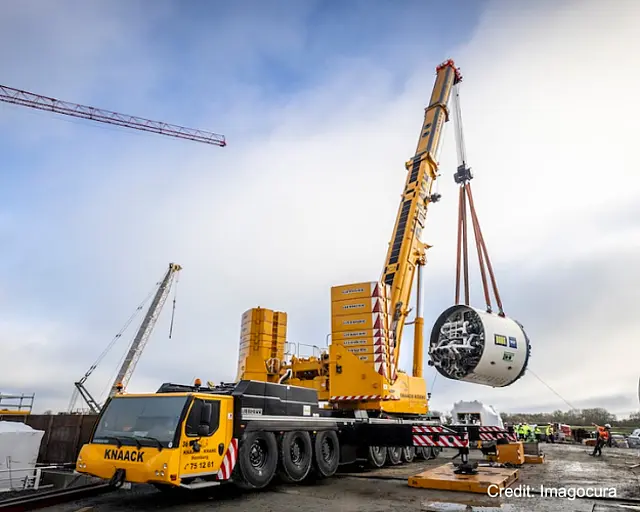
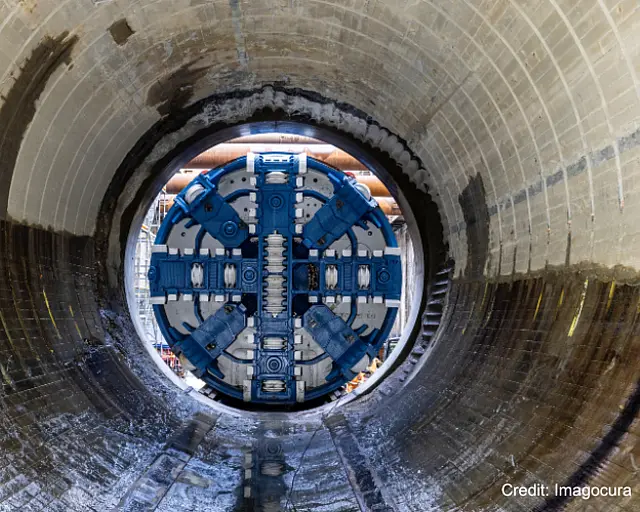
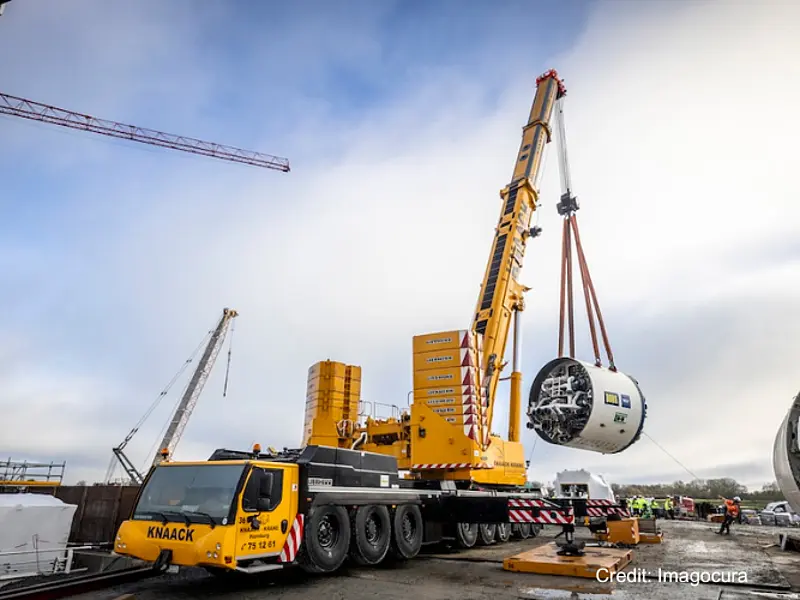
- The TBM tunnel with an internal diameter of 4.0 m is to be excavated using the TBM hydro-shield method with a single-shell segmental lining, lining thickness 30 cm
- In addition, short sections are to be constructed using the cut-and-cover method
Geology
- artificial fillings
- Holocene deposits of the Elbe marsh (organic soft layers, tidal sand, alternating layers of clay/sand)
- Deposits of the Elbe glacial valley (sands with gravel intercalations or gravel with stone intercalations)
- Boulder clay, Lauenburg layers (silt/clay with fine sand)
- Silty fine sands with boulder clay and mica clay
General data
Project
ElbX crossing structure, tunnel section
Client
Porr GmbH & Co. KGaA (as contractor of TenneT TSO GmbH)
Contractor
Wayss & Freytag Ingenieurbau in consortium with Porr GmbH & Co. KGaA (Tunnel ElbX consortium)
Construction period
2023 to 2027


Wind energy from north to south
The SuedLink grid expansion project of the two transmission system operators TenneT Germany and TransnetBW is one of the key infrastructure projects of the German energy transition.
Once completed, the power line will transport renewable energy over a distance of around 700 kilometres from Brunsbüttel in Schleswig-Holstein to Großgartach in Baden-Württemberg. A special section of this major project is the undercrossing of the Elbe with the ElbX crossing structure.
A modern tunnel with a length of around 5.2 kilometres is being built here, through which six high-voltage cables will be routed under the river. The aim is to efficiently and reliably transport wind energy from the north to the south of Germany and thus make a decisive contribution to a sustainable power supply and the realisation of the energy transition.
Further projects
Frankfurt
Sustainable mobility for Frankfurt’s Europaviertel
München
Extension of underground line 5
Frankfurt am Main
Expansion of local transport in the Rhine-Main region